(1) Basic cadet's vest
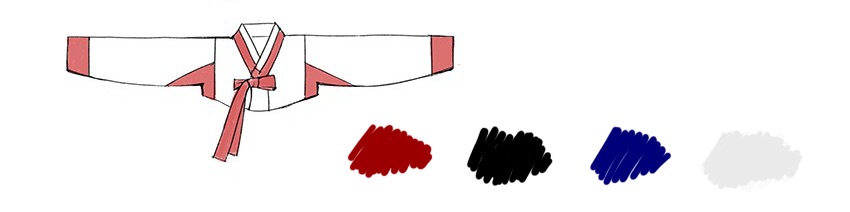
The basic cadet jacket is the ‘Samhoejang jacket.’Samhoejang Jeogori refers to a Jeogori in which the ends, bangs, and side tassels are of different colors from the base of the Jeogori. In the past, during the Joseon Dynasty, only women from noble families were allowed to wear it.
The colors of the ends, collars, and side ties of the jeogori were to be chosen based on the cadet's major, but were all unified in the same color to ensure harmony between the Hanul and Bitsol dormitories. Meanwhile,The base color of the jeogori is based on the five cardinal colors: red for the red hat, black for the black turtle hat, blue-green for the blue dragon hat, and light gray for the white tiger hat. The cadets can choose to attach the ends of the sleeves to either the geutdong or geodeulji (a type of fabric that is sewn inside the cuff to prevent the cuffs from getting dirty, unlike the geutdong where a different color of fabric is sewn onto the cuffs). The color of the geodeulji is also chisaek. The material of the jeogori is all silk, but depending on the characteristics of the silk, different fabrics are used in the summer. This will be described in a later rite.
The sleeves of the jeogori are divided into tongsu (wide sleeves 2-3 times the width of the arm) and jakchi (sleeves that are attached to the arm) depending on the size of the sleeve opening. The jakchi type was adopted for the convenience of the cadets and to prevent them from getting dirty easily. In addition, the line at the bottom of the sleeve called ‘baerae’It was decided that the gokbaerae appeared after the mid-Joseon period. Therefore, to summarize, the cadet's jeogori is a 'chaksoo-type gokbaerae samhoejang jeogori.'Meanwhile, the ‘bungeobaerae’, which is shaped like a bungeo boat and familiar to us, was a sleeve style created in the 1920s and was not adopted because it was considered to be inconsistent with the history of Ulryeok Hwihak, which has its roots in Sungkyunkwan during the Joseon Dynasty.
Lastly, the collar of the jeogori is shaped like the nose of a pair of beoseon (traditional Korean socks) and is made of the dangko-git, which was popular in the mid- and late Joseon Dynasty.
Cadets are free to modify their jeogori, but if it causes disgust or discomfort to others or deviates from the format of the Samhoejang jeogori, it is considered to be against the dress code.
(2) Jacket of a cadet belonging to the reunion
While similar to the regular cadets' jacket, the lapels/knots are differentiated. Each dormitory head wears a colored lapels/knots decorated with a gold-leafed phoenix, while the student council president wears a white lapels/knots decorated with a gold-leafed dragon. Like the "cheopji" described in the previous section, this is intended to demonstrate the responsibility and honor of the cadets belonging to the association, not as an extravagance.
-(Data 1) The basic structure of the Samhoejang Jeogori of the Ulryuk Hwihak students and the color of the Jeogori according to the dormitory
2. Cadet's skirt
The traditional sash-waisted skirt and the modern vest-waisted skirt were in sharp conflict, ultimately leading to the adoption of the vest-waisted skirt. While the vest-waisted skirt is often mistaken for the traditional hanbok skirt, it was actually developed by Janet Walter, the principal of Ewha Haktang during the Enlightenment Period, to allow students to participate in physical activities freely. Ulryuk Hwihak also deeply sympathized with this philosophy and, although not traditionally worn, adopted the vest-waisted skirt for the convenience and mobility of its students. However, as long as it did not violate school regulations, the vest-waisted skirt was permitted.
The basic length is ‘just above the knee’, but as long as it does not cause disgust or discomfort to othersThe cadets can freely choose the length of the skirt, and it is also permissible to shorten the width.
The color of the skirt was unified as black to reflect the meaning of "ulryeok," which means "to gather and unite strength." The skirt was also made of silk, and summer fabrics are described in the rite.
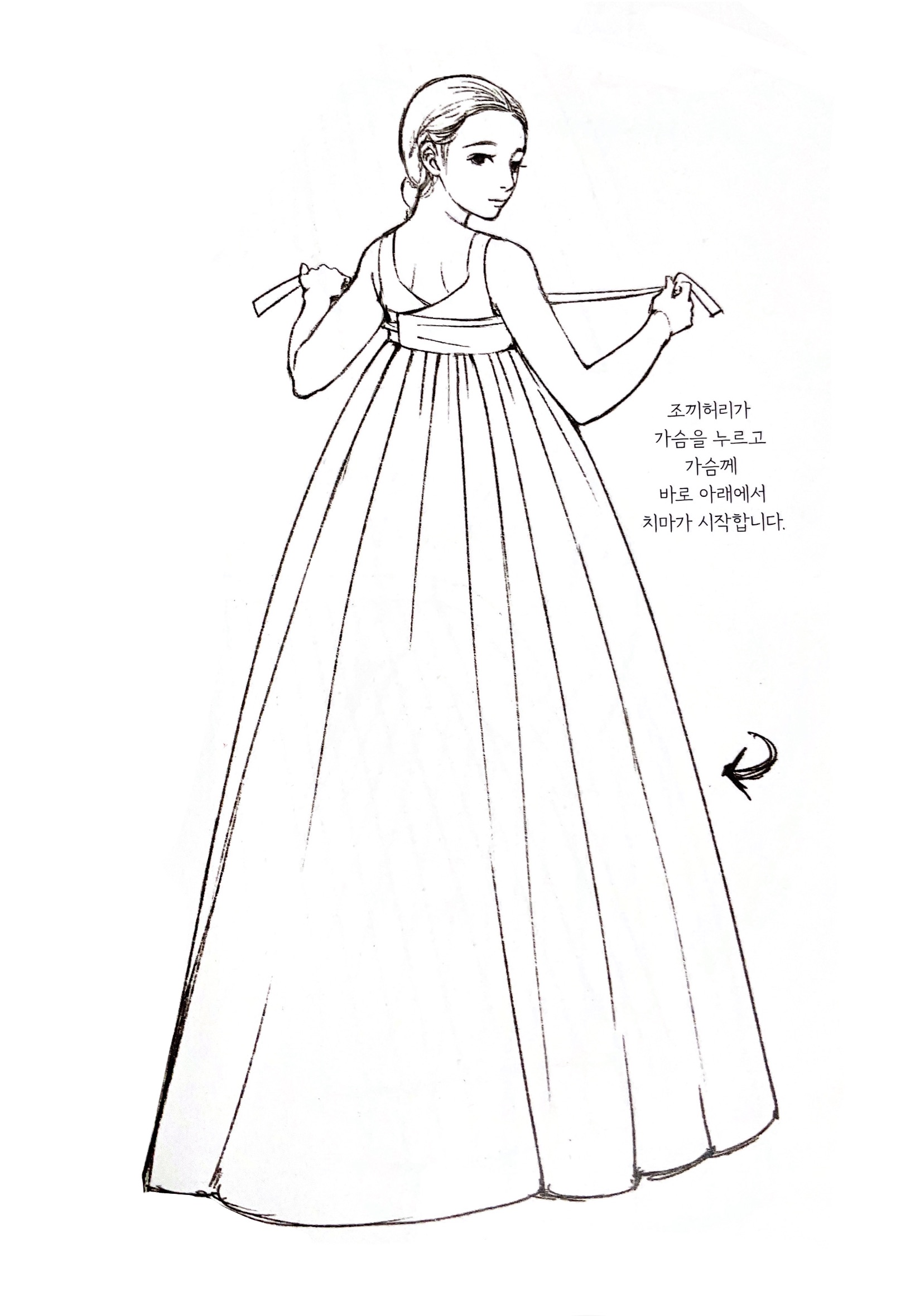
-(Data 2) Vest and skirt
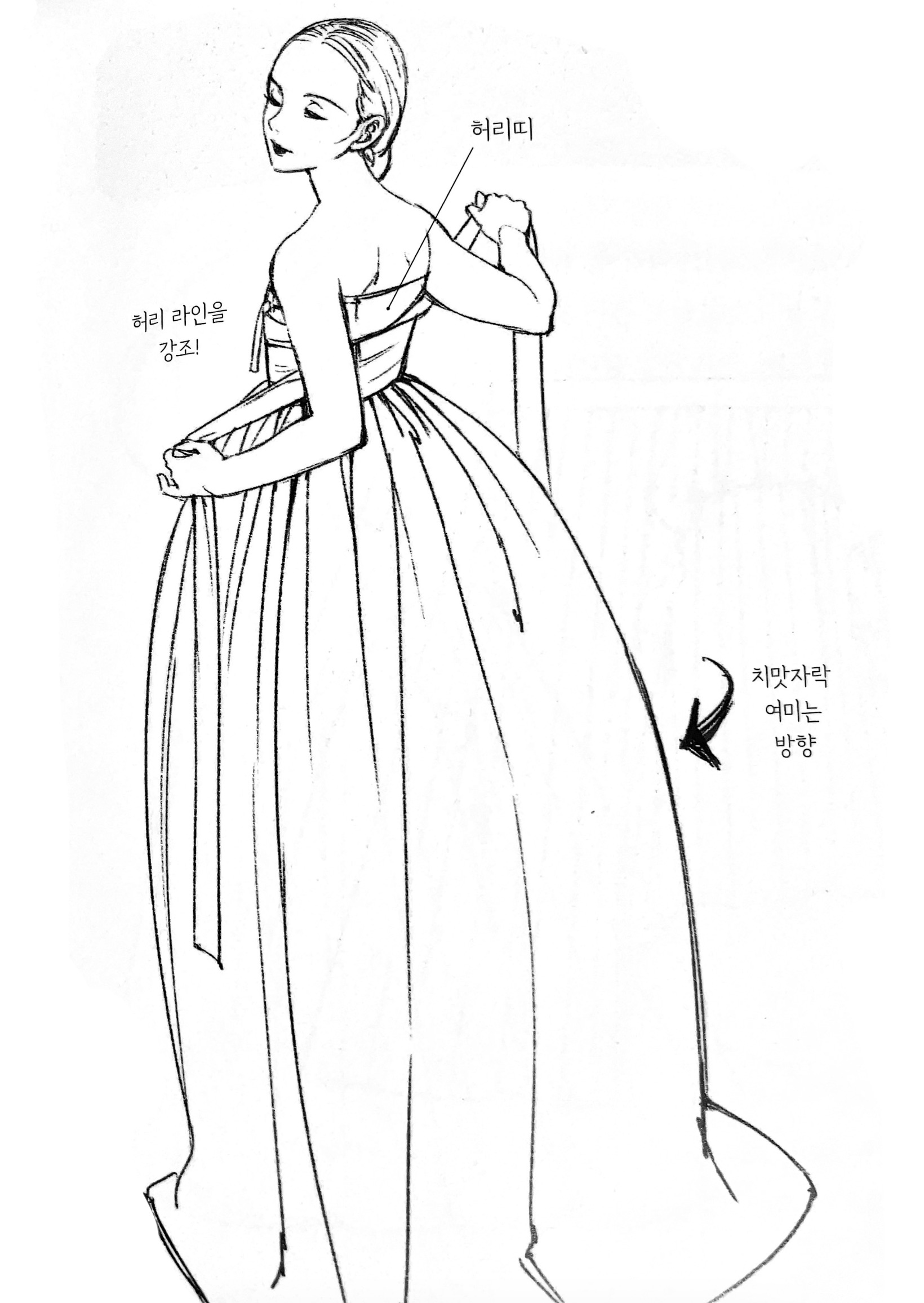
-(Data 3) Waistband skirt
3. A hat
In fact, for cadets living in the 21st century, face-covering hats are no longer relevant. However, hats are permitted for the sake of cadets' style. For safety reasons, they are prohibited in the classroom, but they are freely worn outside of the classroom. Hats are broadly divided into three types: jangot, ssegae chima, and neoul. However, to prevent excessive extravagance among cadets and to demonstrate their authority as teachers, the neoul is only permitted to be worn by faculty, vice principals, and principals. Regardless of their affiliation, cadets can choose either ssegae chima or jangot.
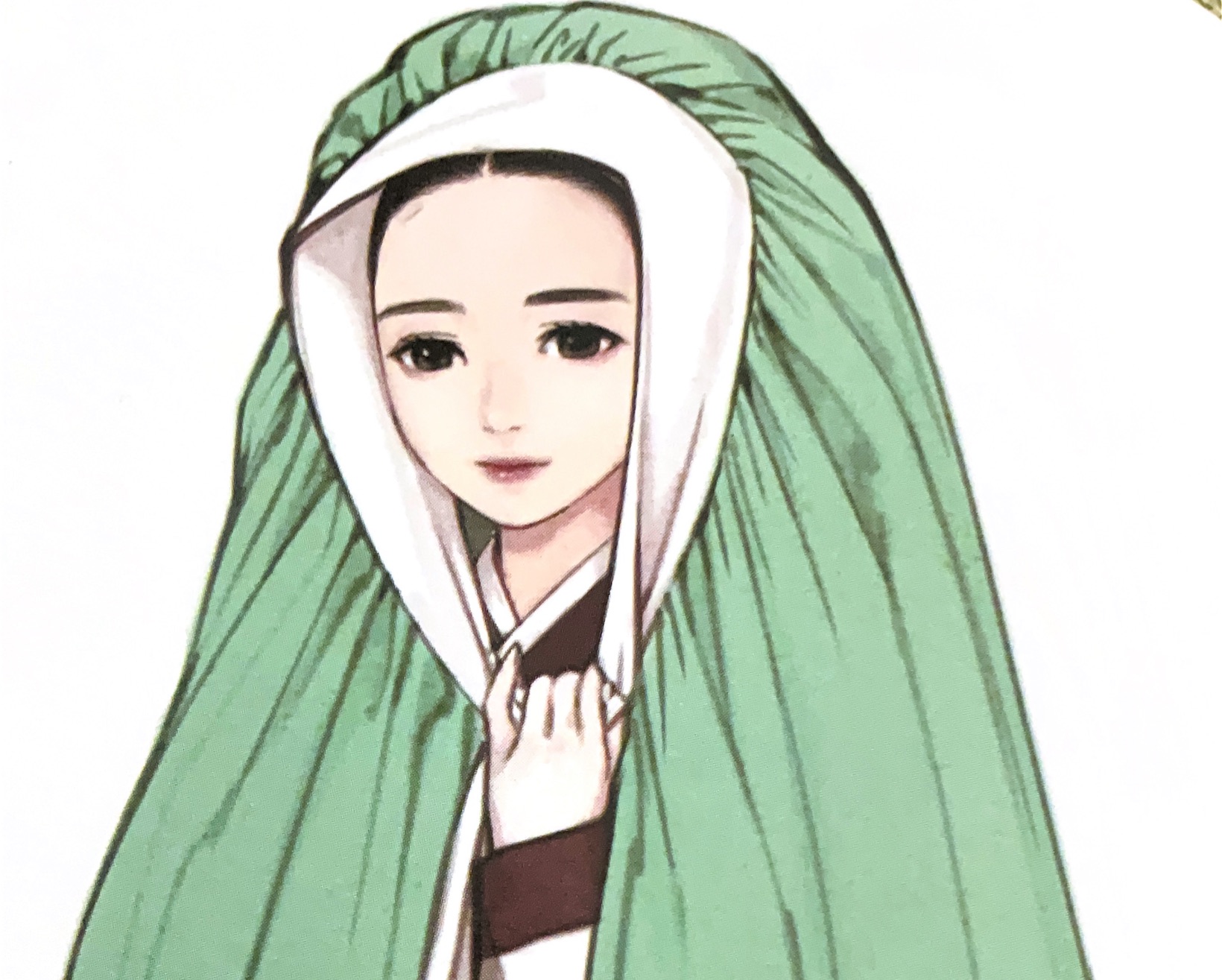
-(Data 4) Skirt
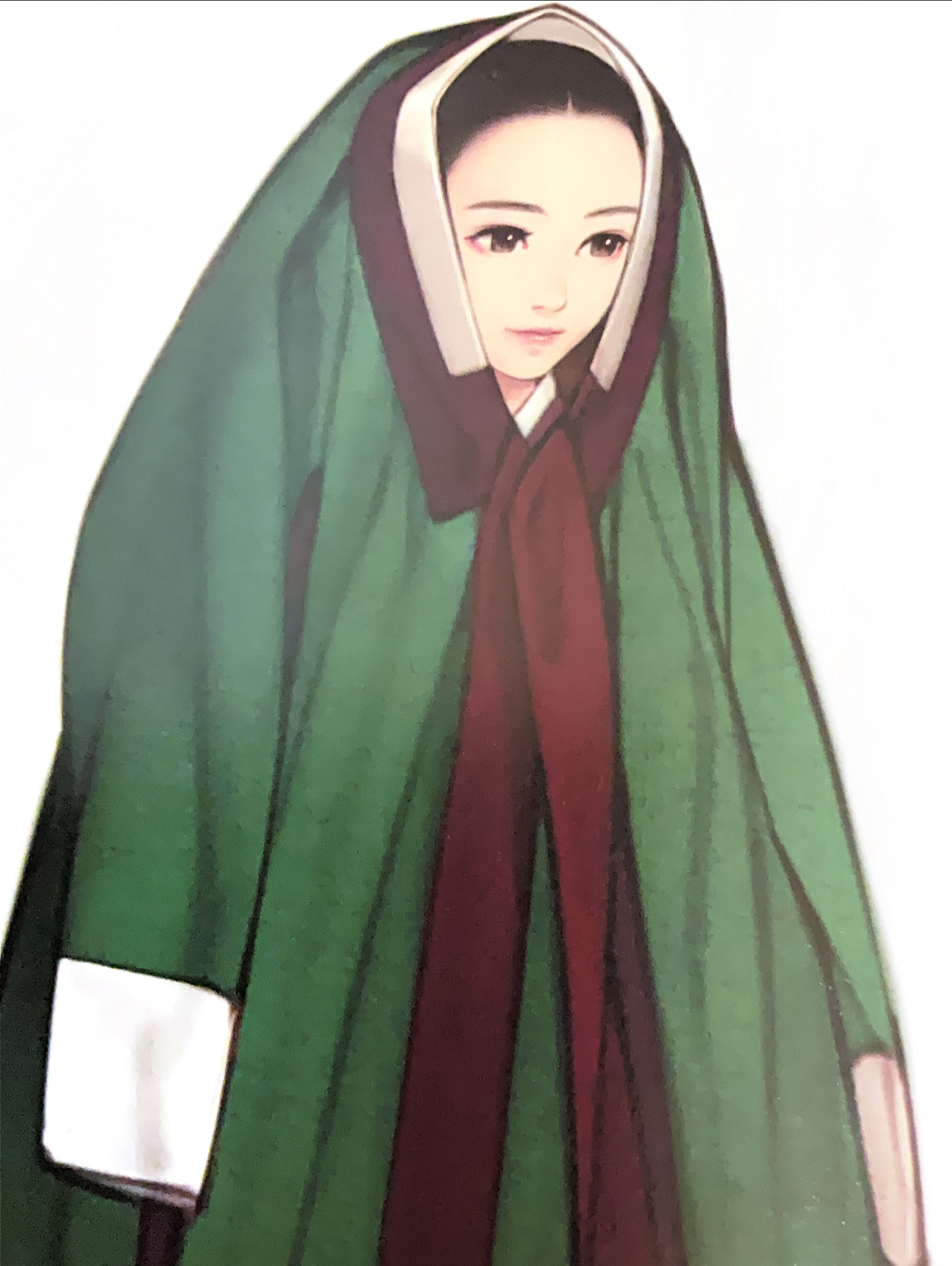
-(Data 5) Long coat
4. Concluding Remarks
This concludes the explanation of the jeogori and skirt according to the cadet's uniform.
Please be informed that all sources for the above information belong to the author, Obsidian (Woonayoung).





![[Break]_[S2] Imperial School thumbnail](https://cdnetphoto.appphotocard.com/fanfic/2428234/213242/thumbnail_img_20210701183032.png)