In keeping with the worldview of Ulryuk Hwihak, which is a combination of Hogwarts and Sungkyunkwan, the clothing style was inspired by the clothing styles of the Joseon Dynasty.
At this time, when deciding on the hairstyle, it was adopted in accordance with the ‘Gyeongguk Daejeon’ compiled during the reign of King Seongjong.
(1) ponytail
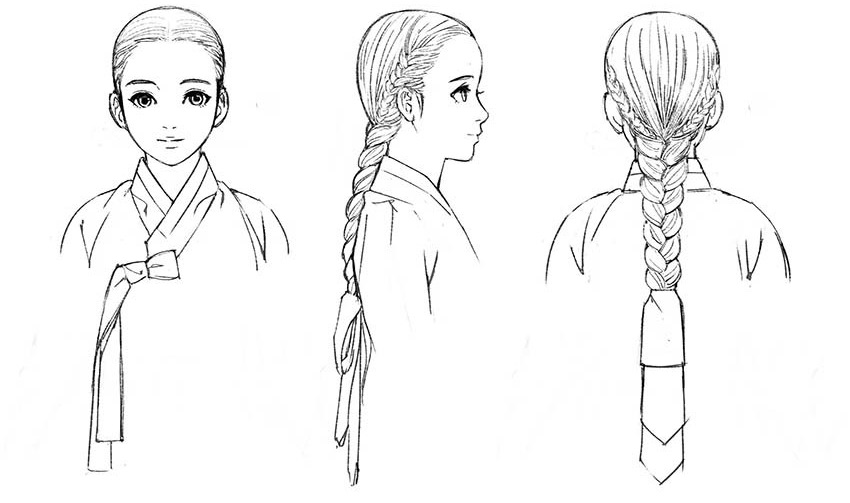
The daenggi hair style was a common hairstyle for unmarried women during the Joseon Dynasty.
When applying this to the Ulryuk Hwihak, the ‘marriageable age’ specified in Gyeongguk Daejeon and the modern situation were taken into consideration, and the age of female students under 16 was considered.
It was adopted as a hairstyle.
There are two ways to present the danggi: traditional and modern.There are two purposes: one is for cadets who are not accustomed to wearing a danggi, and the other is to preserve the traditional Joseon way.
The above two methods are explained in detail in the materials below.
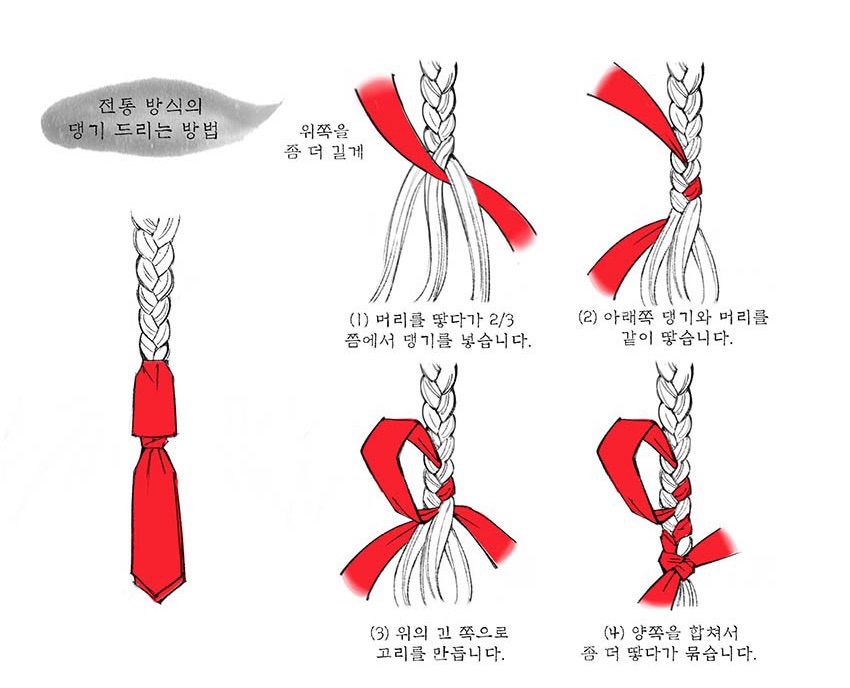
-(Data 1) Traditional way of giving a danggi
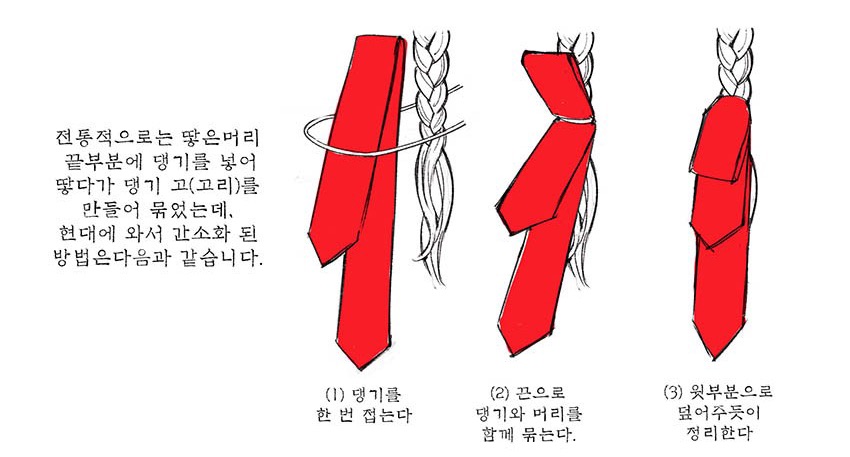
-(Data 2) Simplified method of giving a danggi
(2) Side-parted hair
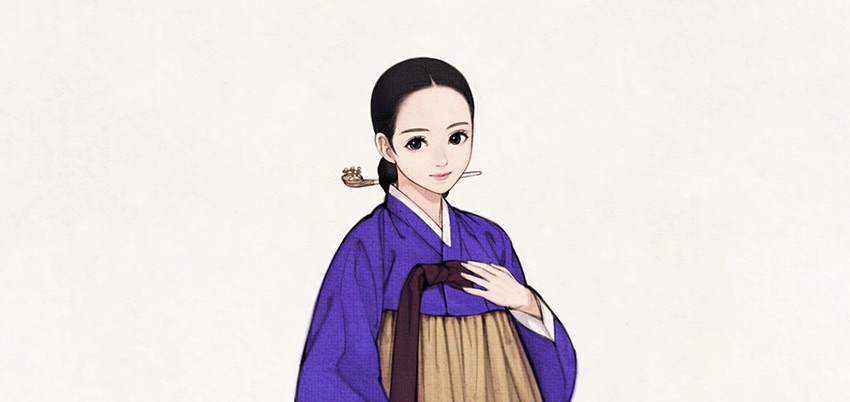
-(Data 3) Appearance with a bun-shaped head and a bungeo-belly jacket
The side-parted hairstyle is also called ‘side-parted hair’ and was a common hairstyle for married women during the Joseon Dynasty.
In the case of Ulryeok Hwihak, considering Gyeongguk Daejeon and modern circumstances,It was adopted as a hairstyle for female cadets over the age of 16. It was also adopted with consideration for the convenience and activity of female cadets.
To prevent the creation of an inappropriate atmosphere of extravagance among cadets and the gap between the rich and poor among cadets.There are restrictions on the back of the head with a bun.
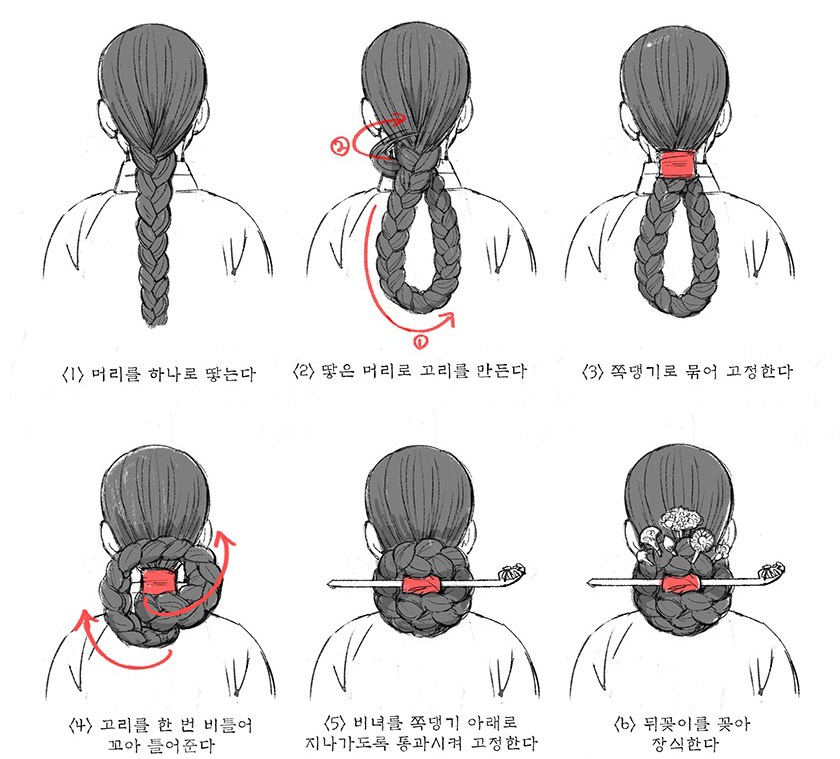
-(Data 4) How to do a side parted hair
(2)-1 New head
Saeangmeori is a hairstyle worn by women of old, and is a common sight in historical dramas. It is also a hairstyle with a long history, as it evolved from the "ssanggyemeori" style that appeared during the Three Kingdoms period.
The Saeangmeori method is a supplementary method for female cadets over 16 years of age who have difficulty understanding the difficult method of putting on a bun. The method is explained in detail in the material below.
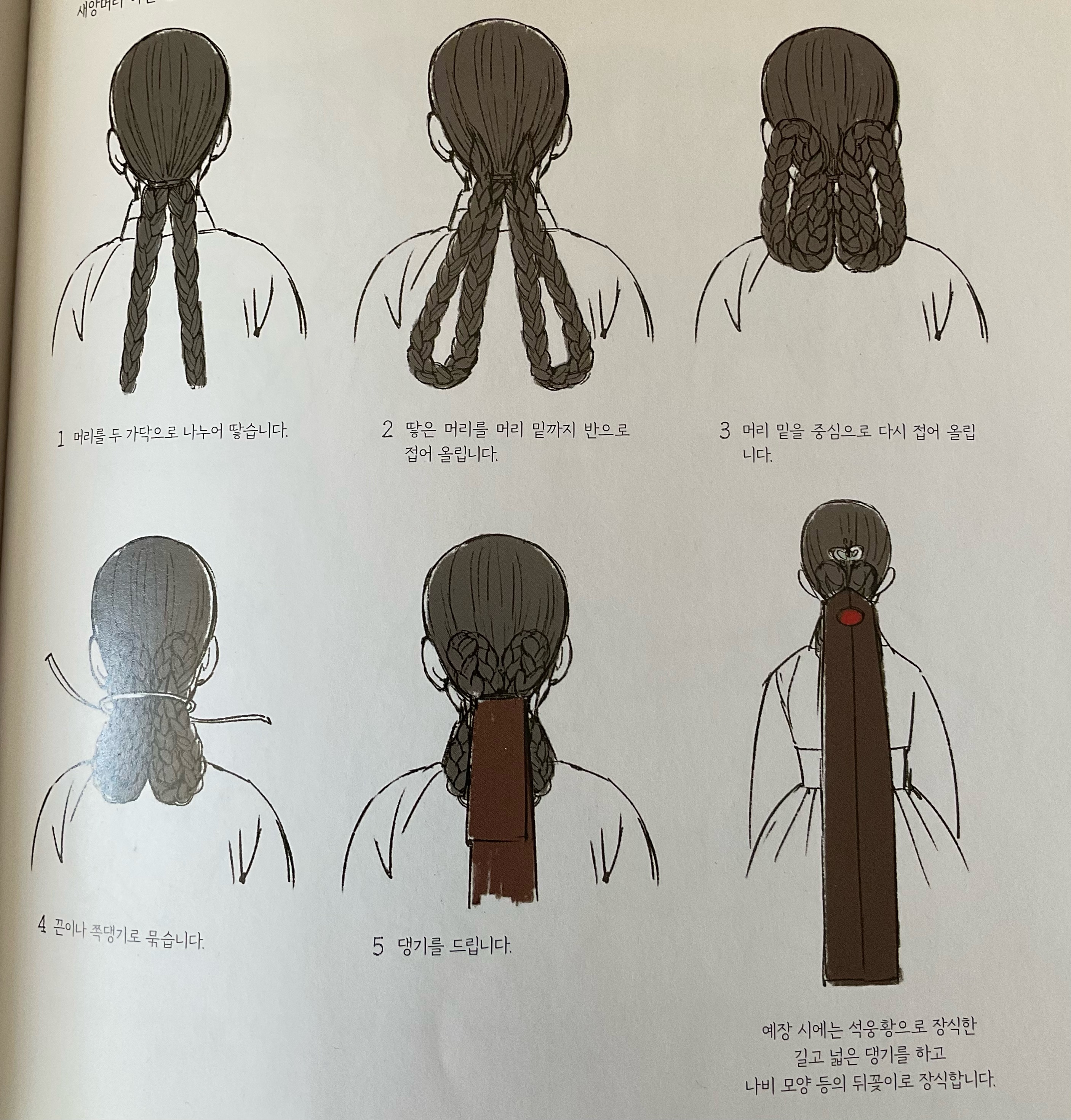
-(Data 5) How to do a new hairstyle
2. Headwear according to the cadet's affiliation
(This paragraph was created to describe the headgear of regular cadets and cadets belonging to the Jaehoe (Ulyuk Hwihak Student Council) cadets.)
To prevent the creation of an inappropriate atmosphere of extravagance and the disparity between the rich and poor among cadets, general cadets are allowed to wear headdresses freely, but with restrictions on their extravagance. Meanwhile, cadets affiliated with the Jaehoe receive a "cheopji" (a Korean name for a headdress) and wear it regularly, thereby identifying themselves as Jaehoe cadets.
(1) Dragon's cheopji
During the Joseon Dynasty, this cheopji was exclusively reserved for the queen. At Ulryuk Hwihak, this cheopji is worn by the president of the student council. It is plated with gold and cannot be transferred to another student unless the president resigns or graduates. When a new president is elected, he or she inherits the cheopji from the previous president.
(2) Phoenix leaflet
During the Joseon Dynasty, this was a cheopji worn by concubines, and in the Ulleung Hwihak, it was worn by the dormitory heads of each school. It was plated with silver or gold, and the gold-plated cheopji was worn on important school occasions, such as the Sagwanjeon. In ordinary times, the silver-plated cheopji was worn to set an example for other cadets by maintaining a simple appearance.
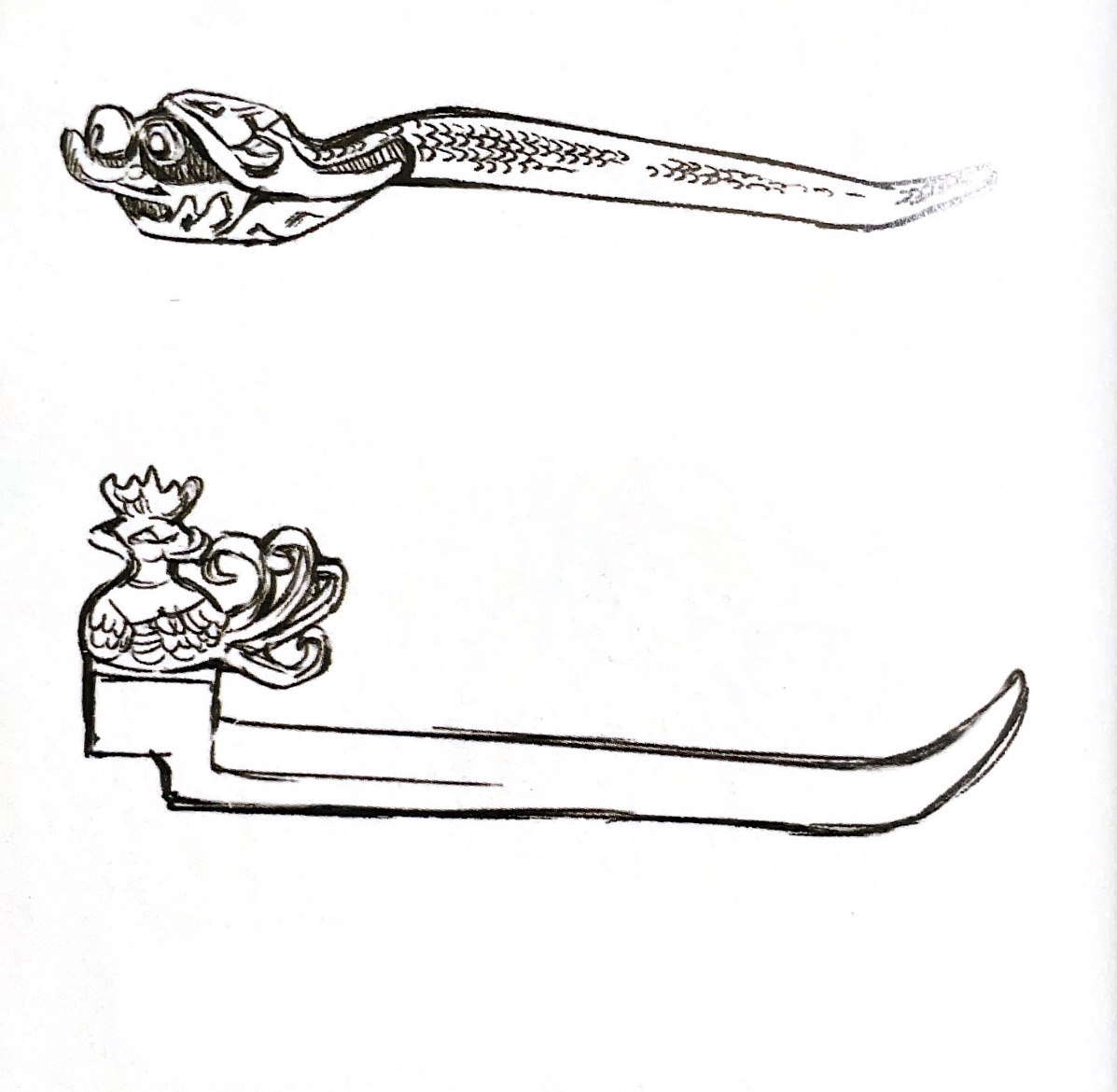
-(Data 6) Dragon and Phoenix envelopes
The cheopji (collared jacket) was designed to distinguish between cadets affiliated with the reunion and regular cadets, and serves to instill in cadets a sense of honor and responsibility. Therefore, wearing the cheopji (collared jacket) by regular cadets violates the uniform system.
3. Concluding Remarks
This concludes the explanation of the clothing system for the heads of the students of the Ulryuk Hwihak Academy.
Please note that the source of the above materials is the author Obsidian (Woonayoung).
![[Break]_[S2] Imperial School thumbnail](https://cdnetphoto.appphotocard.com/fanfic/2428234/213242/thumbnail_img_20210701183032.png)